
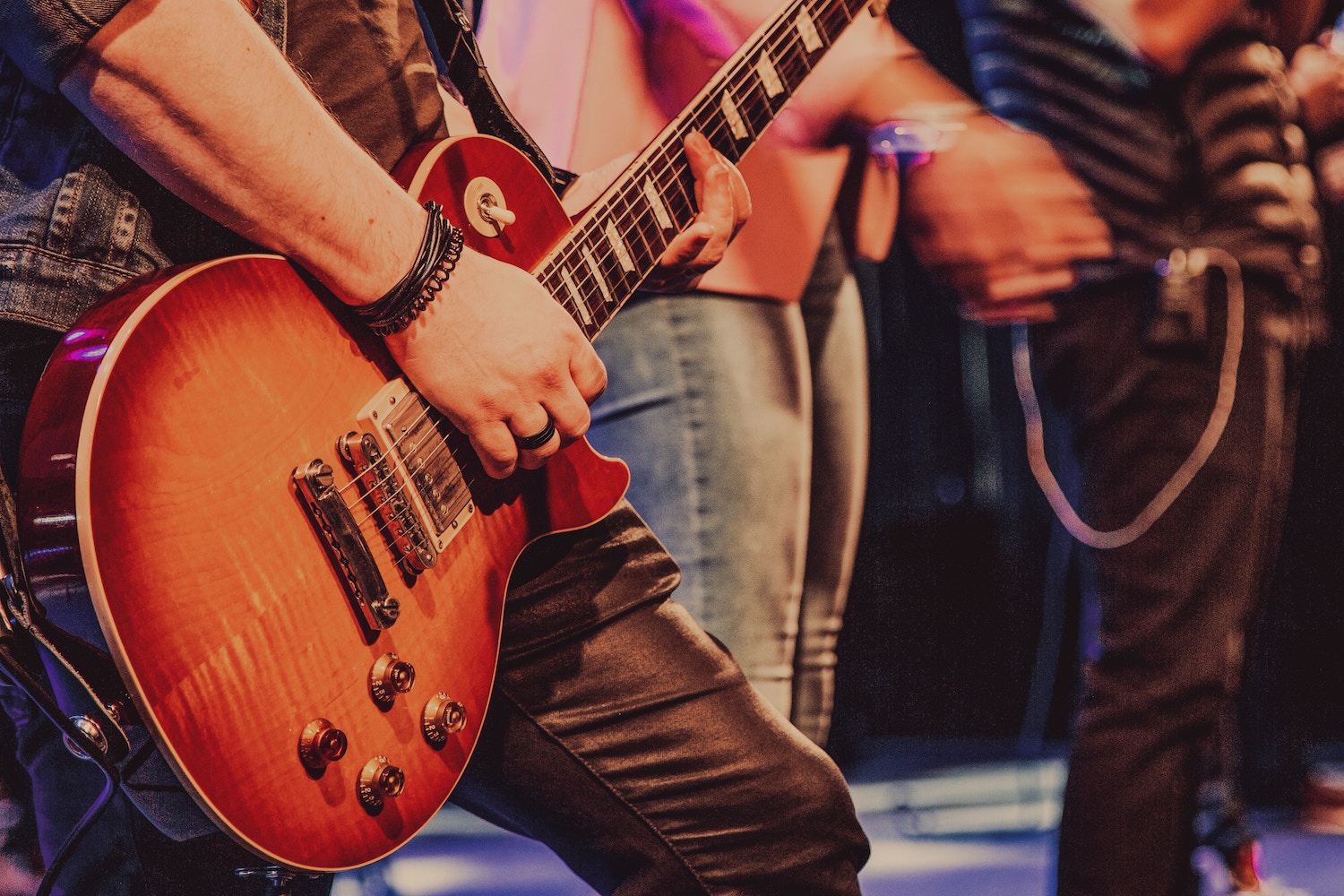
A lot of guitar players want to jump straight into songs, riffs, solos, or whatever they are currently working on. That is understandable. Guitar W\warm-ups are not always the most exciting part of practice.
But they matter.
A good guitar warm-up does more than just loosen up your fingers. It prepares your hands, improves control, builds better habits, and helps you play with more accuracy and less tension. Over time, strong warm-up habits can make a major difference in your technique, tone, speed, and confidence.
For intermediate guitar players especially, warm-ups should not be random finger exercises done half-heartedly for a few minutes. They should have a purpose. They should help you move better, sound cleaner, and fix the mechanical issues that often keep players stuck.
This guide breaks down how to think about guitar warm-ups, which exercises actually help, and how to use them to build stronger technique.
Why Guitar Warm-Up Technique Matter
A proper warm-up helps with several things at once.
First, it gets your hands moving gradually instead of asking them to go from zero to full-speed playing. That reduces stiffness and helps your fingers respond more naturally.
Second, it gives you a chance to focus on mechanics. During a song, your attention is split between rhythm, chords, notes, timing, and memory. During a warm-up, you can isolate your picking, finger placement, pressure, synchronization, and hand tension.
Third, it builds consistency. Guitar technique is not just about what you can do on your best day. It is about what you can do reliably and cleanly over and over again.
A strong warm-up can help you:
- play with less tension
- improve finger independence
- clean up sloppy fretting
- develop better pick control
- improve timing and synchronization
- increase endurance
- reduce unnecessary hand fatigue
- build speed the right way
What a Good Guitar Warm-Up Should Do
A good warm-up is not meant to show off. It is meant to prepare.
That means your warm-up should do four things:
- gradually wake up both hands
- reinforce clean mechanics
- expose tension or sloppy movement
- set the tone for the rest of your practice session
A bad warm-up is usually too fast, too mindless, or too difficult too soon.
A good warm-up is slow enough to notice details and focused enough to improve them.
Before You Start: Basic Warm-Up Rules
Before getting into exercises, there are a few important rules that make every warm-up more effective.
Start slower than you think you need to
Most players begin too fast. When you play too fast at the beginning, you hide mistakes. Slow playing exposes them. That is what you want.
Use as little tension as possible
Pay attention to your shoulders, wrists, forearms, thumb, and jaw. Many guitar players tense muscles they do not even realize they are using.
Focus on clean movement, not speed
Speed is not the first goal. Clean note separation, accurate finger placement, relaxed motion, and even timing come first.
Keep your fingers close to the fretboard
Big, exaggerated movements waste energy and slow you down. Efficient players use smaller motions.
Stay just behind the fret
When fretting notes, place your finger close to the fret wire, not in the middle of the fret space. This helps produce a clearer note with less effort.
Use a metronome often
Warm-ups are not just physical. They are rhythmic. A metronome helps build consistency and exposes rushing or dragging.
The Best Guitar Warm-Ups for Technique
The most useful warm-ups usually target these five areas:
- fretting-hand control
- picking-hand consistency
- left-right hand synchronization
- finger independence
- mobility across the strings and neck
Below are several of the best warm-ups to build these areas.
1. The Chromatic 1-2-3-4 Exercise
This is one of the most common guitar warm-ups for a reason. It is simple, controlled, and great for developing finger independence and coordination.
How to do it
Start on the low E string.
Play:
- 1st fret with index finger
- 2nd fret with middle finger
- 3rd fret with ring finger
- 4th fret with pinky
Then move to the A string and repeat. Continue across all six strings. Then you can reverse it and come back.
Example:
e|-------------------------1-2-3-4-|
B|-----------------1-2-3-4---------|
G|---------1-2-3-4-----------------|
D|-----1-2-3-4---------------------|
A|-1-2-3-4-------------------------|
E|---------------------------------|
What this warm-up helps
This exercise develops:
- finger independence
- pinky strength
- accurate fretting
- alternate picking
- hand synchronization
What to focus on
Do not let your unused fingers fly far away from the fretboard. That is one of the most common mistakes. Keep them relaxed and close.
Also pay attention to note clarity. Each note should ring clearly. If one note buzzes or sounds weak, do not rush past it.
Use strict alternate picking:
down, up, down, up.
How intermediate players should use it
Do not just run it up and down mindlessly. Change the way you use it.
Try these variations:
- one note per click
- two notes per click
- accent every fourth note
- play staccato
- play legato
- reverse it as 4-3-2-1
That turns a simple warm-up into a deeper technique exercise.
2. The Spider Exercise
The spider exercise is excellent for finger independence because it forces your fretting hand to move in less natural patterns.
How to do it
A classic version looks like this:
On one string pair at a time, play:
- index on one fret/string
- ring on next fret/string
- middle on next string/fret
- pinky on next string/fret
Example shape:
e|-----------------------------|
B|------------------------2-4--|
G|------------------1-3--------|
D|------------2-4--------------|
A|------1-3--------------------|
E|-2-4-------------------------|
There are many versions, but the point is the same: your fingers have to move independently instead of relying on easy adjacent patterns.
What this warm-up helps
This exercise develops:
- finger independence
- awkward transitions
- fretting precision
- mental focus
- hand control under tension
What to focus on
This one is not about speed at all. It is about control.
Try to keep each finger curved and planted efficiently. Avoid collapsing your knuckles or flattening fingers unnecessarily. Do not squeeze the neck too hard with your thumb.
The spider exercise will quickly reveal whether your ring finger and pinky are working independently or just following the stronger fingers around.
Common mistake
Players often let the hand twist or tense up too much. Slow it down. The goal is not surviving the pattern. The goal is learning to control it.
3. Finger Independence Hold Exercise
This is a great warm-up because it trains finger strength and control without relying on fast movement.
How to do it
Place all four fingers on one string across four frets. For example:
- index on 5th fret
- middle on 6th fret
- ring on 7th fret
- pinky on 8th fret
Now lift and play one finger at a time while trying to keep the other fingers down.
For example:
- hold all four down
- lift and play pinky
- put it back
- lift and play ring
- put it back
- continue through all fingers
Then repeat across strings.
What this warm-up helps
This builds:
- fretting-hand independence
- finger stability
- better control
- reduced collapse in weak fingers
- awareness of unnecessary movement
Why it matters
A lot of players think technique problems come from lack of speed. Often they actually come from lack of control. This exercise trains the hand to stay organized.
When one finger moves, the others should not jump wildly. That kind of discipline helps with scales, chords, lead playing, and overall efficiency.
4. Alternate Picking on One String
Many guitar players warm up the fretting hand but neglect the picking hand. That is a mistake. The picking hand is often where timing and clarity fall apart.
How to do it
Choose one note on one string. For example, 5th fret on the D string.
Use strict alternate picking:
down, up, down, up.
Set a metronome and play quarter notes, then eighth notes, then sixteenth notes if clean.
What this warm-up helps
This builds:
- pick consistency
- rhythmic precision
- hand endurance
- better attack
- awareness of excess motion
What to focus on
Keep the pick motion small. Many intermediate players use far more movement than necessary.
Watch for these issues:
- digging too deeply into the string
- inconsistent angle
- heavy tension in the wrist
- uneven volume between downstrokes and upstrokes
The goal is to make both directions feel balanced.
Why this matters
If your picking is inconsistent, even simple lines sound shaky. Strong picking technique makes scales, riffs, arpeggios, and solos sound more confident.
5. String Crossing Exercise
Playing on one string is one thing. Moving cleanly between strings is another. Many players sound fine until the picking hand has to cross strings repeatedly.
How to do it
Use a simple two-string pattern like this:
e|------------------------5-7-5------------------------|
B|----------------5-7-8---------8-7-5------------------|
Or even simpler:
- play two notes on one string
- move to the next string
- return
- repeat
What this warm-up helps
This exercise improves:
- string tracking
- picking-hand accuracy
- hand synchronization
- smooth directional changes
- control between inside and outside picking
What to focus on
Be deliberate about the string changes. Many players rush the crossing and hit extra strings or create unwanted noise.
Listen for:
- clean note separation
- no accidental string hits
- even timing through the crossing point
This is where many “almost clean” players become genuinely clean.
6. Legato Warm-Up: Hammer-Ons and Pull-Offs
Legato exercises build fretting-hand strength and smoothness. They also expose weak finger attacks, especially in the ring finger and pinky.
How to do it
Pick the first note, then use hammer-ons and pull-offs for the rest.
Example on one string:
- 5h6h7h8
- 8p7p6p5
You can do this on every string.
What this warm-up helps
This improves:
- finger strength
- note articulation
- pinky development
- smoothness in lead playing
- control without overpicking
What to focus on
For hammer-ons, the note should sound strong even though it is not picked. That means the finger needs to come down firmly and accurately.
For pull-offs, do not just lift the finger straight off. Give it a slight controlled pull so the next note sounds clear.
Common mistake
Players often let legato notes become weak and blurry. Each note should still sound intentional. Smooth does not mean lazy.
7. Position Shift Exercise
A lot of intermediate players can play a pattern in one position, but their control breaks down when they have to move up or down the neck.
How to do it
Play a simple scale or pattern in one position, then shift.
Example:
- play 5th to 8th fret pattern
- shift to 7th to 10th
- shift again
You can do this with pentatonic scales, three-note-per-string patterns, or simple chromatic movements.
What this warm-up helps
This improves:
- neck mobility
- hand repositioning
- shift accuracy
- visual awareness of the fretboard
- smooth transitions
What to focus on
Do not jump wildly. Train the shift itself.
Notice:
- whether your thumb stays relaxed
- whether you overshoot the new position
- whether the timing breaks during the move
Shifting is a technique skill of its own. It should feel smooth, not frantic.
8. Muting and Noise Control Exercise
One of the biggest differences between beginner and stronger intermediate players is not the number of notes they know. It is how cleanly they control unwanted noise.
How to do it
Play a simple scale slowly and listen for string noise. Use both hands to mute.
Your fretting hand can lightly touch unused strings. Your picking hand palm can mute lower strings as needed.
You can also practice this by playing short riffs and stopping each note cleanly.
What this warm-up helps
This develops:
- cleaner playing
- better muting habits
- more control with gain or distortion
- tighter rhythm work
- more professional-sounding tone
Why it matters
A player can know a lot and still sound sloppy because of extra string noise. Clean technique is not just about hitting the right notes. It is also about controlling the notes you do not want.
Technique Principles Every Guitar Player Should Work On
Warm-ups matter most when they connect to good technique. Here are the core technique principles worth paying attention to during every exercise.
1. Finger Economy
Finger economy means not using more movement than necessary.
A lot of players lift fingers too high, swing the pick too widely, or shift more than needed. Those extra motions waste energy and create inconsistency.
Good technique looks efficient. The fingers stay close. The pick moves a short distance. The hand remains calm.
This is one of the clearest markers of better players.
2. Synchronization Between Both Hands
Many technique issues are really timing issues between the fretting hand and picking hand.
If the fretting hand lands before the pick, or the pick arrives before the note is fully fretted, the result can sound messy or weak.
That is why slow scale work is so valuable. It teaches your hands to arrive together.
A clean note is a coordinated note.
3. Relaxation Under Control
Good players are not loose in a lazy way. They are relaxed in a controlled way.
That means:
- enough pressure to fret the note cleanly
- enough grip to control the pick
- enough structure to move accurately
But not more than that.
Too much tension slows everything down and creates fatigue. Learn to notice it early.
4. Tone Quality
Warm-ups should not sound mechanical and ugly. Even a simple exercise should sound musical in its own way.
Ask:
- are the notes even in volume?
- do they ring clearly?
- is the attack controlled?
- are the transitions smooth?
Technique is not separate from tone. Technique creates tone.
5. Timing
A warm-up played sloppily in time is still sloppy. A warm-up played cleanly but with poor timing is incomplete.
Use rhythm as part of technique training.
Even the simplest exercise becomes much more valuable when played with:
- a metronome
- consistent subdivision
- accented beats
- intentional rhythmic phrasing
A Sample 10-Minute Guitar Warm-Up Routine
Here is a practical warm-up routine that covers the basics well.
Minute 1-2: Slow chromatic 1-2-3-4
Focus on relaxed fretting and alternate picking.
Minute 3-4: Spider exercise
Focus on finger independence and control.
Minute 5-6: One-string alternate picking
Focus on pick motion and timing.
Minute 7-8: Legato exercise
Focus on hammer-ons, pull-offs, and note clarity.
Minute 9-10: String crossing or muting exercise
Focus on clean transitions and reducing unwanted noise.
This is enough to prepare your hands and reinforce strong mechanics before moving into songs or harder practice material.
A More Advanced 15-Minute Warm-Up Routine
For intermediate players who want something deeper:
1. Chromatic warm-up with accents
Play 1-2-3-4, accenting every fourth note.
2. Spider variation
Use a less natural fingering pattern and play very slowly.
3. Alternate picking with metronome
One string first, then two-string crossing.
4. Legato sequence
Hammer-ons and pull-offs with ring finger and pinky emphasis.
5. Position shift pattern
Move a scale shape up the neck while staying in time.
6. Muting check
Play a short line with deliberate string muting and listen closely.
That covers most of the technique areas intermediate players need.
Common Warm-Up Mistakes
Treating warm-ups like filler
Warm-ups are not just something to “get through.” They are skill-building tools.
Going too fast too early
This is the biggest one. Fast sloppy playing teaches sloppy playing.
Ignoring the picking hand
A lot of players focus only on fretting exercises and overlook the hand that actually creates the attack and timing.
Practicing without listening
If you are doing the exercise but not hearing the buzz, tension, timing issues, or unwanted string noise, the value drops fast.
Doing the same thing every day without purpose
Consistency is good. Mindlessness is not. Repeat good exercises, but know what each one is supposed to improve.
How to Know Your Warm-Ups Are Working
You know your warm-up routine is helping when you notice things like:
- cleaner notes with less buzz
- smoother alternate picking
- less hand fatigue
- improved control with ring finger and pinky
- better timing
- cleaner string changes
- less extra noise
- more comfort moving around the neck
Warm-ups are not magic. But over weeks and months, they help build the technical foundation that better playing depends on.
Final Thoughts
Guitar warm-ups are not about showing how fast you can move your fingers. They are about building cleaner mechanics, better control, and stronger habits.
The best warm-ups prepare your hands, expose weaknesses, and train the exact movements that make your playing sound better. They help you approach the guitar with intention instead of just jumping in cold and hoping for the best.
For intermediate players, this matters even more. At that stage, progress often depends less on learning new things and more on doing familiar things better. Cleaner picking. Better finger independence. Less tension. Better timing. Smoother shifts. Stronger muting.
That is what warm-ups and focused technique work can give you.
And over time, those small improvements add up to a much bigger sound.